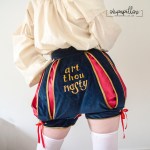
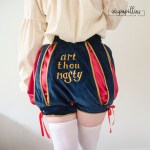
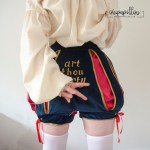
OKAY SO HERE ARE THE PICS. Inspired by this post by @pipistrellus (@pipcomix)
These are 16th century Renaissance inspired hotpants, panelled with navy velvet with a red silk lining and hand-embroidered butt slogan, which I believe is like 300% historically accurate. They’re actually modelled off a genuine Tudor pattern but then made ridiculous because who am I.
Worn with thigh highs and a 18th C shirt cuz it was all I had to hand and frankly shirts don’t change that much lol.
Hello! Of course it’s not a bother, I like to help! 🙂
The veiled hat is called “wéimào/帷帽”. I wrote a little on it in this post, and I also have a weimao tag. Below: historical weimao.
The original form of the weimao was the “mìlí/幂蓠”, a hat with a body-long veil that originated from the foreign cultures of the northwest. The mili became popular during the Sui dynasty (581-618), especially among ladies of the nobility who rode horses on public roads. The fancier veils were adorned with jade and kingfisher feathers. Below: mili in a historical drama.
The mili’s veil shortened toward the end of the Sui, and the new wide-brimmed hat with shoulder-length veil was known as a weimao. During the Tang dynasty (618-907), the weimao became so popular that edicts to wear the more modest mili were ignored. It was popular not just among palace women, but also among commoners who followed their lead. Below: weimao in historical dramas.





















 Creator's Archive