Here’s a little trick I’ve used in D&D games where the premise of your campaign calls for the party to have access to lots of Stuff, but you don’t want to do a whole bunch of bookkeeping: the Wagon.
In a nutshell, the party has a horse-drawn wagon that they use to get around between – and often during – adventures. This doesn’t come out of any individual player character’s starting budget; it’s just provided as part of the campaign premise.
Before setting out from a town or other place of rest, the party has to decide how many gold pieces they want to spend on supplies. These funds aren’t spent on anything in particular, and form a running total that represents how much Stuff is in the wagon.
Any time a player character needs something in the way of supplies during a journey or adventure, one of two things can happen:
1. If it’s something that any fool would have packed for the trip and it’s something that could reasonably have been obtained at one of the party’s recent stopovers (e.g., rations, spare clothing, fifty feet of rope, etc.), then the wagon contains as much of it as they reasonably need. Just deduct the Player’s Handbook list price for the item(s) in question from the wagon’s total.
2. If it’s something where having packed it would take some explaining, or if it’s something that’s unlikely to have been available for purchase at any of the party’s recent stopovers (e.g., a telescope, a barrel of fine wine, a book of dwarven erotic poetry, etc.), the player in need makes a retroactive Intelligence or Wisdom check, versus a DC set by the GM, to see if they somehow anticipated the need for the item(s) in question. Proficiency may apply to this check, depending on what’s needed. The results are read as follows:
Success: You find what you’re looking for, more or less. If the group is amenable, you can narrate a brief flashback explaining the circumstances of its acquisition. Deduct its list price (or a price set by the GM, if it’s not on the list) from the wagon’s total.
Failure by 5 points or less: You find something sort of close to what you’re looking for. The GM decides exactly what; it won’t ever be useless for the purpose at hand, but depending on her current level of whimsy, it may simply be a lesser version of what you were looking for, or it may be something creatively off the mark. Deduct and optionally flash back as above.
Failure by more than 5 points: You come up empty-handed, and can’t try again for that item or anything closely resembling it until after your next stopover.
As an incidental benefit, all the junk the wagon is carrying acts as a sort of ablative armour. If the wagon or its horses would ever take damage, instead subtract a number of gold pieces from its total equal to the number of hit points of damage it would have suffered. The GM is encouraged to describe what’s been destroyed in lurid detail.
I think the reason I love DnD wizards, aside from enjoying the mechanics of playing them, is that, in RP terms, wizards can be people with no real talent or innate special ability beyond a sheer determination to learn magic the hard way.
Wizards are really the only class who prioritize the “Intelligence” score, which in DnD terms is more about acquired knowledge than any kind of inherent ability. They have no great athletic ability, like the martial classes. They’re unique among all DnD spellcasters – they aren’t grappling with and trying to control great power they’d have no matter what (like a sorcerer) or receiving power from a mighty force beyond themselves that demands responsibility and devotion (like a cleric or a warlock).
Wizards seek out power. Which, in DnD worlds, is actually kind of a nuts thing to do. So it’s always fun to figure our why your wizard character would even want to learn all these arcane secrets. Why they would work so, so hard at it, in spite of all the danger. Wizards can be characters with no “talent” or “special skill” beyond a work ethic and determination to try their hardest.
I just…love the RP possibilities that opens up. That’s why wizards are my favorite class. And also probably why I gravitate toward loving wizard characters in DnD shows and podcasts.
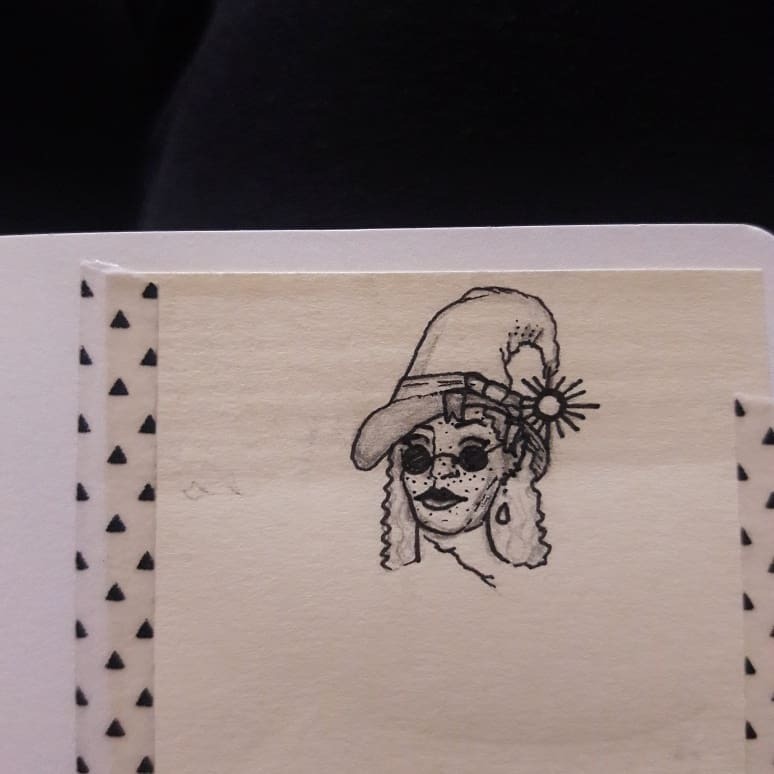
Here’s a little dump collection of the first bits and bobs of Bellamy art I did while I was still figuring out his character design and backstory…
When my friends invited me to a Curse of Strahd game, I was like, ‘this is my chance to make the most gothic character ever possible.’ I browsed through the available subclasses and races at the time and saw grave cleric (when it was still an Unearthed Arcana class) and immediately pointed furiously at it over and over saying THAT ONE.
The flavour of the grave cleric subclass is written as: you despise the undead and think they are abominations destined to be hunted down and destroyed for subverting the natural order of life and death. But I thought it was really interesting that most of the grave cleric’s abilities involve subverting the natural order of life and death by bringing your friends back from the edge of death.
I was really into the hypocrisy of the class so I browsed through the available races and saw
Revenant
And was like
‘I’m going to make my grave cleric undead because that’s cool as fuck and hilarious when the grave cleric flavour is that they hate undead. And also I’m going to go to whatever lengths I need to to disguise my true race from the other players until the most dramatic moment to reveal that my character has been a dead ghost haunting a plague suit for the entire campaign.
He’s never going to take his mask off, because behind it he has no body, he’s just a terrifying incorporeal shadow person underneath, and I’m going to slowly hint at it over the course of the campaign.’
So here’s some very old Bellamy doodles! Featuring Riki the aarakocra rogue giving his secretly dead lich-esque party member an offensive meme shirt, and Dvalin the tiefling warlock getting to score Bellamy’s drink because he! cannot consume food and water! and you ain’t gettin that mask off baby. And also Bellamy being Barovia’s Okayest Cleric who lets you start dying before deciding to heal you.
Bellamy’s a ghost because he sacrificed himself in an occult god summoning ritual, by cutting out his own heart
to an evil god
in exchange for the life of his dying daughter! It Did Not Work Out Well For Bellamy.
The party, pointing to an NPC that the DM never intended to be a recurring character: That’s My Child Now
@caffeinatedwriters Now you gotta write them a quest where they get the chance to bring him back!!
The first dungeon-boss that my group was meant to just quickly kill at the end of their very first session, they saved from death. Repeatedly. She’s now a reoccurring character who despite the fact that she is defs evil and showing no signs of redemption (yet) they keep. Saving?? So I guess I’d better write a redemption arc?
I love your players so much. I’m imagining Local Villain turning good mainly out of confusion because why they save me tho????
We’ve adopted our first small villain to the party as a DMPC. During the interrogation he suddenly bursts into tears, says the villaining was his last desperate try to unfuck his life and now we can do whatever we want with him, cause he’s done. He’s out of ideas and his life is still fucked up. The whole party went all “aaaaww there there pat pat poor thing” and now he’s our token pretty boy and an in-game DM’s snarky voice.
We found a 20 ft cube of gelatinous acid in the underdark. He wanted to see sunlight. He was perfect. So he became part of our party. He’s slow so he always follows behind us and every now and again he has a few new skeletons inside of him of the fools that tried to sneak up behind us. He’s my favorite.
I love this. I support you and your sun-loving acid dog
We accidentally deafened a goblin and we inexplicably felt worse about that than we did about killing all his friends so now he’s librarian/curator for all the junk in our bag of holding
My Goblin Minion’s name is Skippy and I feed him cheezy potatoes. He has seriously helped the party more than my main character has.
Today our party adopted a giant crocodile and the dragon egg he’s guarding because our DM forgot our Druid had speak with animals.
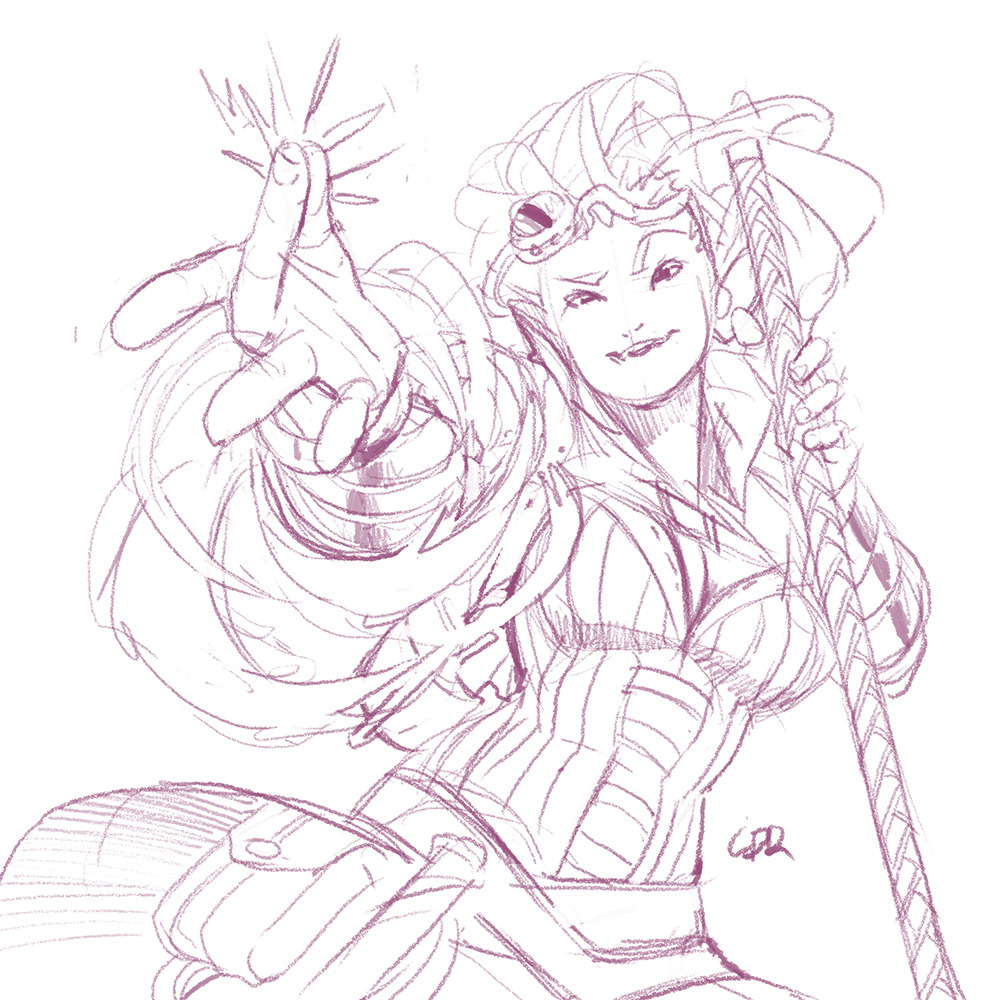
So with the drop of the new Ravnica book for Dnd, I am super sad that there are only 2 new subclasses for the houses. And as much as I was not a a fan of the Invention wizard, I still think it would have been better than naught.
So here have a Izzet (blustersquall) inspired wizard :V
The villain is my favorite part of ANY campaign. So here I am gonna talk about how you can make different kinds of villains, honing down on a specific type and offering various ways to make them interesting. As always, we will be looking at real world history, culture, and mythology to make your villains seem realistic and specifically dastardly. For our first entry let’s discuss…
~~~~~~~~~~~~Archfey Villains~~~~~~~~~~~~
Why archfey? Two reasons: 1) I like archfey, they’re fuckin’ dicks. 2) Someone who’s name I can’t find asked me to make this and I am more than happy to make things for my followers.
NOW, let’s understand what an archfey really is.
An archfey is a creature of fey ancestry that is excessively powerful, nearing the power of a deity. Usually, such creatures are native to the Feywild. Within this realm, they command great power and can even shape the realm itself to their whim and whimsy.
Common Misconception
Archfey doesn’t mean “superelf.” An archfey can be a pixie, a dryad, a ghost, a beast of some kind, anything that is classified as “fae” or “fae-like” can be turned into an archfey. Elf-like archfey are the most COMMON, but absolutely not the ONLY form of an archfey.
The other misconception is that the archfey are good. This is because the Feywild is mistaken as a plain of good, while Shadowfell is a plain of evil. This is wrong. Feywild and Shadowfell aren’t images of good and evil. Their are images of abundance vs lack of emotion. Shadowfell is a plain of the depressed, the emotionless, the broken. Feywild is a plain of the bipolar, the expressive, the artists and the madmen.
(I’m getting tired of saying “archfey”)
Characteristics of the Archfey
So to understand how we get an Archfey villain, lets discuss some general characteristics of the archfey.
Background.
The archfey come from the Feywild. This is a place governed by emotion. When its denizens feel something strongly, they can physically change their environment. A cruel witch will transform the forest around her to grow trees that bleed and produce fruits shaped like heads. While a kind princess will transform the fields around her into a gorgeous plain of crystalline flowers.
Now, the archfey can transform the Feywild at a moment’s notice. Which means they can do one or both of these things:
They can control their emotions very well.
They only ever have emotional extremes powerful enough to instantly alter the Feywild.
Lifestyle
The archfey live careless lives. They are too powerful to have any natural predators, as such live carefree and happy. Due to their extended life (they live like thousands of years), they are NEVER in rush. Why should they be? They’ve got time, ALL the time.
Environment
Based on HOW the Feywild is, how it is ever-shifting and changing, its denizens must learn to control this change to be able to thrive. Since we are working with an archfey, we can assume they’ve already thrived to the top of their food chain. As such, they must have learned to command the Feywild OR adapted to this changing world, having very drastic changes in personality, behavior, or even looks.
With all this information, let’s share some ideas for archfey villains.
Examples of Archfey Villains
Example #1: The Many Faced Man. Simply put, a doppelganger. The archfey are ever-changing. For this example, our villain always changes their looks. So your Party pisses off this archfey or in some way becomes enemies with him. So when your spends the night camping outside, whoever is keeping watch suddenly poof, is teleported away (because this is an Archfey, it can do this kind of shiz) and in steps a the Many Faced Man who takes this lost PCs form.
I urge you, IRL, pull the Player of this character aside and tell them your plan. Tell them that you want to replace them with a Doppelganger, but not to worry, because their PC will eventually be rescued. THEN, offer them to role play as a doppelganger pretending to be their character. Most players will have TONS of fun with this idea. If you player doesn’t want to RP a doppelganger offer them to role a new temporary PC or just dump the idea.
Example #2: Prince of Liars. A very powerful archfey this one is. He has immense power in the Feywild, and has managed to TRAP the Party in his domain. I’m stealing from Curse of Strahd here, but essentially rework that campaign with more fey-like themes. Instead of vampires, we got fey, instead of Strahd we got a spoiled brat of a prince who is all-powerful but only wants to mess with the Party before killing them in a cruel manner for his or her amusement.
For additional complexity, you can make the Prince of Liars have very drastic shifts of emotion. Think, the bad guy from Split (the movie). One moment he is nice to the Party and leads them to a place filled with treasure, the next he snaps into sheer brutal cruelty and slaughters the ranger’s companion. This will put the Party on edge when dealing with the guy. Furthermore, knowing that the archfey is powerful enough to destroy them with ease puts the Party on the edge, at least until they find something that can kill or neutralize this big bad.
Example #3: The Undying Court. This is for LARGE scale campaigns. Let’s say you have a game that is heavy on politics, but spans different dimensions. So the PCs are working with the politics between Mount Celestia and the 9 Hells and the Abyss, etc. That’s when you throw in the Undying Court. A hive-mind of several Archfey that operate as a singular entity and wish to expand their chaotic influence across the many plains. They may ally with Demon Lords and expedite chaotic situations to gain more power, so your PCs would have to negotiate a turbulent field of politics.
And that’s that folks. I hope this provides SOME use to y’all and helps you out with future ideas. Of course you don’t HAVE to follow my guideline 100%. You don’t need to follow it at all, in fact. Just take it as it is, my ideas for a good fey villain. What about you folks? Would you like to see breakdowns of other kinds of villains? I’d love to do more. Send your recommendations my way or share your ideas for villains. I’d love to hear it. Good luck everyone.





 Creator's Archive